
Bushwalking Safety for School Groups: Thunderstorm Risk on the Bibbulmun Track
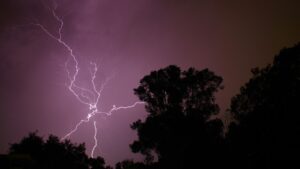
A thunderstorm in Perth, WA. Photo by Ian on Unsplash.
Bushwalking safety for school groups requires clear planning, especially when severe weather is a possibility. On the Bibbulmun Track, thunderstorms can develop quickly, bringing lightning risks that demand immediate action from teachers, outdoor educators and scout leaders.
This is not just about comfort or inconvenience. Every thunderstorm produces lightning, and no place outdoors is completely safe when a storm is nearby.
Bushwalking safety for school groups: a quick checklist
Before heading out, make sure your group is prepared to respond:
- Check weather forecasts and conditions before departure
- Plan to avoid exposed areas during storm-prone times of day
- Identify shelter points along your route
- Use the 30/30 rule to guide decision-making
- Be prepared to stop or turn back early
Why bushwalking safety matters for school groups
Leading a group on the Bibbulmun Track comes with added responsibility. School groups and scouts often include young or less experienced walkers, and decision-making sits with the leader.
Thunderstorms increase risk due to:
- Exposure on ridgelines and open sections
- Tall forest and isolated trees
- Wet ground and waterways conducting electricity
- The potential for multiple injuries within a group
For outdoor education providers, this makes conservative planning essential.
Understanding thunderstorm risk on the Bibbulmun Track
The Bibbulmun Track passes through a mix of forest, coastline and elevated terrain. While beautiful, these environments can leave groups exposed when storms build.
Lightning does not need to strike directly to cause harm. Ground current and side flashes can travel through soil, roots and water, affecting people nearby.
This is why bushwalking safety in WA must include clear procedures for thunderstorms, particularly for organised groups.
The 30/30 rule for lightning safety
A simple and effective way to manage risk is the 30/30 rule, widely used in outdoor education and supported by the Bureau of Meteorology.
- If the time between seeing lightning and hearing thunder is 30 seconds or less, the storm is close enough to be dangerous. Stop activity and seek shelter immediately.
- After the last thunder, wait at least 30 minutes before resuming your walk
For school groups, this creates a clear, objective trigger for action and removes hesitation in the field.
Planning ahead: bushwalking safety for schools and scouts
For organised groups, this should sit alongside your existing duty-of-care obligations.
Good planning is your strongest safeguard.
- Check forecasts before and during your trip
- Build weather decision points into your itinerary
- Identify huts, track towns or vehicles as potential shelter
- Set clear turnaround times
- Always hike with a GPS tracker (a Personal Locator Beacon or similar) in case you lose mobile phone reception, and ensure that everyone in your hiking group knows how to use it. There are many parts of the Bibbulmun Track that do NOT have reliable reception, and even in parts that normally do have reception, you can lose reception during thunderstorms.
For teachers and scout leaders, these steps form part of your duty of care and support safer group management.
If a storm is approaching
Act early to reduce risk:
- Move off ridgelines, summits and open ground if safe to do so. Stay low when descending to a less exposed location.
- Avoid isolated trees, rock outcrops and high points
- Stay clear of waterways and wet areas
- Put distance between people in your group (reduce multiple casualties)
If a safe shelter (a building or enclosed vehicle) is available, use it immediately.
If your group is caught in a storm
Sometimes, especially on remote sections of the Bibbulmun Track, shelter isn’t available. In that case, reduce your risk as much as possible:
- Crouch low with feet together—do not lie down
- Minimise contact with the ground (sit on an insulating layer if possible, like a sleeping mat)
- Keep your group spread out
- Move metal objects (like trekking poles, metal water bottles) 20 meters away if time allows
These actions do not make you “safe”, but they can reduce the severity of injury.
What not to do
Common mistakes can increase risk:
- Do not shelter under trees, under a rock overhang or at the entrance to a cave.
- Do not stay on high ground
- Do not remain in or near water (salt water is particularly dangerous)
- Do not huddle together as a group
- Do not continue walking to “push through” the storm
Emergency response on the Track
Lightning strike victims do not carry an electrical charge and are safe to assist.
- Call 000 immediately if you have phone reception. If not, activate your GPS tracker or personal locator beacon (PLB).
- Move the group to a safer location
- Check airway, breathing and pulse
- Begin CPR if needed—cardiac arrest is common
Rapid response can be life-saving.
Plan ahead, stay safer on the Track
Bushwalking safety for school groups starts well before stepping onto the Track. With the right preparation and clear decision-making, leaders can create safe and rewarding experiences for young people.
Explore our expedition planning resources for schools and scouts:
https://www.bibbulmuntrack.org.au/trip-planner/schools-scouts/expedition-planning
We also offer student presentations across the Perth metro area, covering expedition planning, first aid and safety. These sessions support teachers and group leaders in preparing students for safe, confident experiences on the Bibbulmun Track:
https://www.bibbulmuntrack.org.au/trip-planner/schools-scouts


