
Bird Flu Detected in WA: What Track Users Need to Know
26 August 2026
H5 avian influenza, commonly known as bird flu, has been detected in a small number of wild seabirds in Western Australia. While there have been no detections in poultry and no evidence of significant wildlife mortalities (as of wa.gov.au information on 26 August 2026), community awareness and early reporting are important to help protect our wildlife, pets, farms and natural places.
The strain detected, H5N1 clade 2.3.4.4b, is a highly pathogenic form of avian influenza that can affect wild birds and a range of mammals.
The risk to human health remains low, and the state government assures us that Western Australia is well prepared to respond.
If you see sick or dead birds or marine mammals
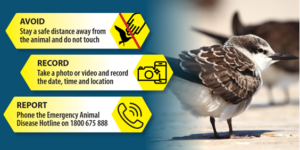 |
|Remember: Avoid, Record, Report
- Avoid contact and keep your distance
- Record the date, time and location, and take photos if safe to do so
- Report it to the Emergency Animal Disease Hotline on 1800 675 888
Please do not touch, move or handle sick or dead wildlife.
How you can help
Whether you’re walking the Bibbulmun Track, visiting a national park, or enjoying local natural areas, simple actions can help reduce the risk of disease spread:
- Keep pets away from wildlife. Keep cats indoors where possible and always keep dogs on a leash in areas where native wildlife may be present.
- Clean footwear and clothing. When moving between national parks, reserves or rural areas, clean your boots, shoes and clothing to help prevent the spread of diseases.
- Avoid, record and report. If you notice multiple sick or dead birds or other wildlife, do not approach them. Record what you see and report it immediately.
By taking these simple precautions, we can all play a part in protecting Western Australia’s unique wildlife and natural environments.
Learn More
For the latest information and resources:
- WA Government H5 Bird Flu Information: https://www.wa.gov.au/organisation/department-of-primary-industries-and-regional-development/h5-avian-influenza-bird-flu-western-australia
- Weekly WA Bird Flu Updates: https://www.wa.gov.au/government/publications/weekly-bird-flu-update-western-australia
- Signs and Reporting Information: https://www.wa.gov.au/organisation/department-of-primary-industries-and-regional-development/avian-influenza-signs-and-how-report
- Australian Government Information: https://www.birdflu.gov.au
- Fact Sheets and Videos: https://www.agriculture.gov.au/biosecurity-trade/pests-diseases-weeds/animal/avian-influenza/resources


